


Blog
How hydraulic demolition shears work
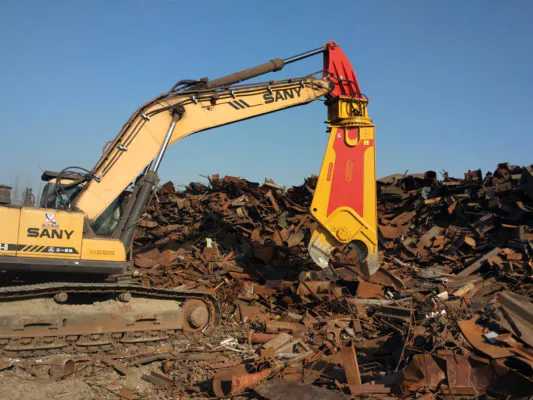
In the world of professional demolition, speed of intervention, structural precision, and the ability to separate heterogeneous materials in real-time have become essential requirements. Hydraulic demolition shears represent one of the most effective solutions for achieving these goals on-site.
These are robust attachments designed to cut, break, and section resistant materials such as steel and metal beams with controlled power. However, it’s not just about raw strength: what distinguishes a high-quality hydraulic shear is the balance between force, control, and adaptability to the specific excavator it is mounted on.
In this deep dive, we at Zanetti Magneti analyze the technical operation of hydraulic demolition shears and their strategic role for those operating on complex civil, industrial, or infrastructural sites. We will also explore the advantages they offer, the key differences compared to other tools like pulverizers or grapples, and the factors to consider when choosing the right model for your fleet.
How hydraulic shears reduce demolition time
One of the main reasons why hydraulic shears are increasingly used on demolition sites is their ability to significantly reduce operating times.
The reason is simple: instead of handling each phase separately (teardown, crushing, metal cutting, loading), the hydraulic shear allows the operator to process multiple materials with a single tool in real-time, eliminating the need for constant equipment swaps.
Key advantages include:
- Cutting speed and maneuverability
Mounted on modern excavators, these shears feature powerful cylinders designed to generate tons of shearing force with surprising opening and closing speeds. This means steel beams, iron bars, and metal structures can be sectioned in seconds.
Furthermore, 360° hydraulic rotation gives the operator full control over orientation, reducing maneuvering time and increasing precision.
- Reduced need for additional equipment
On a traditional construction site, demolishing mixed structures typically requires multiple pieces of equipment: hydraulic shears are ideal for cutting through steel, while hydraulic concrete crushers are best suited for breaking up concrete.
However, on industrial demolition sites, where structures are often a combination of steel and concrete, the use of hydraulic shears has been shown to reduce overall intervention time by up to 40%. This is largely due to the elimination of intermediate steps required for cutting metal separately.
Hydraulic shears vs. demolition crushers: which to choose?
A common question for professionals moving into mechanized demolition is whether to use a shear or a demolition pulverizer (often referred to as “crushers” or “pliers”). The answer depends on the specific task, but there are distinct technical differences:
Hydraulic Shears: The Cutting Specialists
Hydraulic shears are primarily engineered to cut metal structures: beams, profiles, rebar, sheet metal, and mesh. The geometry of the jaws and the force generated by the cylinder allow them to snap through metal resistance cleanly and rapidly.
Ideal for:
- Demolition of steel structures.
- Decommissioned railway lines.
- Industrial or metallic plants.
- Bridges and warehouses with mixed framing.
- Scrapping metal objects, such as steel cables from ski resorts, once cut and prepared for disposal.
Want to learn more? Check out our technical datasheet below to discover all the specific features.
Demolition crushers
The shears are better suited for breaking down masonry and reinforced concrete. They feature wide, heavy-duty jaws capable of crushing large volumes of dense material, though they’re not specifically designed for precise metal cutting, despite many models being equipped with interchangeable blades.
They’re ideal for:
- Masonry buildings
- Reinforced concrete structures
- Residential or civil demolition work
Discover our primary demolition crusher, engineered to deliver power, precision, and reliability at every stage of the job site. It’s the ideal solution for tackling demanding tasks in both civil and industrial sectors.
That said, in cases of complex demolition, the combination of crusher + hydraulic shear ensures maximum efficiency: the grapple crushes, while the shear cuts exposed rebar, optimising each phase and simplifying metal recovery.
Advantages of hydraulic shears on demolition sites
Using a high-quality hydraulic shear, designed for heavy-duty use, brings numerous advantages. It’s not just about power, but about overall productivity, cost savings and safety:
- Precision and control even in tight spaces
Modern shears offer continuous rotation, proportional control and sharp geometries that allow for clean cuts even in difficult environments. This is essential when working near sensitive infrastructure or in urban settings.
- Reduced disposal costs
Cutting metal into controlled sections reduces volume and optimizes truck loading. A neatly loaded truck carries more material in fewer trips = less fuel, less time, lower costs.
- Higher scrap metal value
Well-cut scrap is more valuable than irregularly broken pieces. Scrap dealers appreciate clean sections, free from concrete residues or twisted metal. A shear ensures a finished product ready for recycling.
- Less wear on the excavator
Thanks to the optimal distribution of force and the synergy between hydraulics and structure, modern shears operate smoothly without overloading the excavator’s hydraulic system.
- Increased operator safety
The operational distance, movement precision and reduced manual or mechanical handling allow for safer working conditions, minimizing the risk of sudden breakages or uncontrolled material movement.
How to choose hydraulic shears for demolition
Choosing the right shear for your site is not a secondary detail. It’s a technical-strategic investment that can significantly boost jobsite productivity and profitability.
- Type of material to be processed
- If you mostly work on metal structures, you need a shear designed specifically for cutting metal (with high-resistance blades and reinforced body).
- For mixed demolitions, a primary demolition crusher and a hydraulic pulverizer are more suitable.
- Weight and excavator compatibility
Each shear has a specific weight. It must be compatible with the excavator arm without compromising stability or available hydraulic force. It’s essential to check:
- Operating weight
- Hydraulic flow capacity
- Maximum supported pressure
- Coupling system (pin-on, quick coupler, tilting)
- Material quality and blade durability
Blades must be replaceable, but above all made of high-strength steel (often hardened), able to deliver thousands of cuts before wearing out.
The frame of all Zanetti Magneti hydraulic shears is made from the best structural steels like Strenx and top wear-resistant steels like Hardox.
- Hydraulic or fixed rotation?
A rotating shear offers maximum maneuverability and has become standard for precision tasks. However, in some cases (such as ground-level cutting of pipes or beams), a fixed shear may be sufficient, providing a lighter and more economical solution.
The same logic applies to fixed or rotating pulverizers.
- Service and spare parts
Availability of quick spare parts, local maintenance and technical support is crucial. Buying a shear also means entering a technical relationship with the supplier.
FAQ – Hydraulic shears for demolition
What is the difference between a hydraulic shear and a demolition crusher?
Hydraulic shears are specifically designed to cut metals such as iron, steel and beams. Demolition crushers, on the other hand, are intended for breaking concrete and reinforced structures. Shears offer greater cutting precision, while crushers are more versatile for structural demolition.
Can hydraulic shears cut reinforced concrete?
No, they are not designed to break concrete. However, they can cut the internal rebar once the concrete has been broken down using a crusher or hydraulic hammer.
What materials can be cut with a hydraulic shear?
Mainly steel, iron, metal pipes, I-beams, wire mesh, metal profiles, sheets and industrial components. Some models are optimized for cutting special scrap and alloy structures as well.
Do you need a large excavator to operate a hydraulic shear?
It depends on the model. Shears are available for excavators ranging from 5 to over 80 tons. The key is to choose a shear that matches the excavator’s hydraulic power and lifting capacity.
How long does a hydraulic shear last?
With proper maintenance and correct use, a hydraulic shear can last over 10 years. Blades, joints and hydraulic components can be replaced to extend the equipment’s working life.
Are shear blades interchangeable?
Yes. Quality shears come with hardened steel blades that are interchangeable and reversible, ensuring durability and easy maintenance.
Can hydraulic shears be used in urban environments?
Absolutely. Shears are much quieter than hammers and crushing tools, and they offer greater precision, making them ideal for controlled demolition in urban or residential areas.
How is a hydraulic shear powered?
The shear is powered by the excavator’s hydraulic system. It requires a compatible oil flow and is connected via dedicated couplings or standard adapter plates.
Is specific training required to operate a hydraulic shear?
Technical training on operation, safety and maintenance is always recommended. Although intuitive to use, a hydraulic shear is a powerful tool that should be handled with competence.